Ink Stick or Liquid Ink: Two Paths into Brush Writing
Ink stick or liquid ink? Compare preparation, handling, and practice so you can choose materials that suit your brush-writing routine.
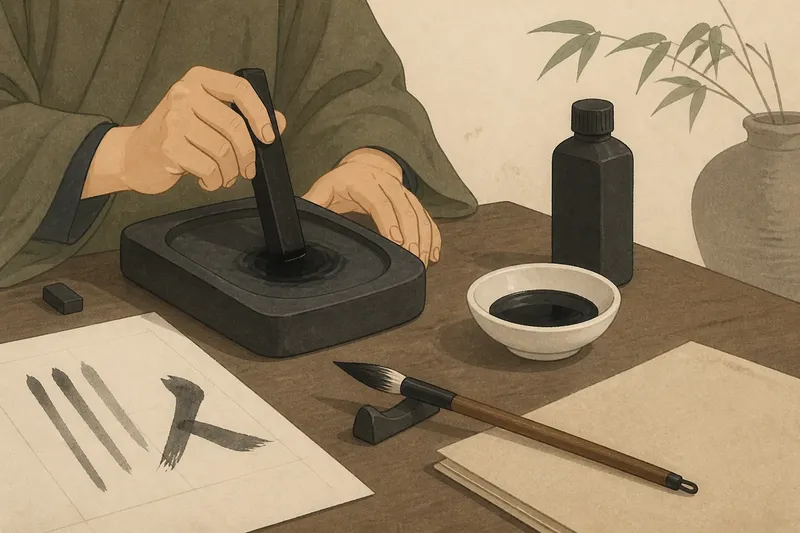
At a low table, a brush rests beside a dark inkstone and a bottle of liquid ink. Both can supply ink for brush writing, but they invite different rhythms: one asks for preparation, while the other is ready to pour. Choosing between an ink stick and liquid ink is less about finding a universal winner than deciding what kind of practice you want.
What is the difference between an ink stick and liquid ink?
An ink stick is a solid bar that a writer grinds with water on an inkstone. Liquid ink has already been prepared and can be poured into a dish or used from its container, depending on the product. Both can produce dark marks, but they differ in how the writer reaches the moment of writing.
Grinding adds a task before the first stroke. The writer holds the stick and moves it across the stone, mixing pigment with water until the ink suits the brush and paper. Liquid ink skips that stage, making it easier to begin with little setup.
The distinction is not simply traditional versus modern. Stick ink is a material prepared at the desk; liquid ink is a prepared supply. Each can support attentive brushwork, and neither determines the quality or seriousness of the writing by itself.
How do you prepare ink from a stick?
Place a small amount of clean water on an inkstone, then rub the ink stick over the stone with gentle, steady pressure. As the water darkens, check its consistency with a brush stroke on scrap paper. Add water if it feels too dense, or continue grinding if it appears too pale for the marks you want.
The inkstone’s surface matters because it gives the stick room to grind while holding the mixture. A shallow pool is easier to manage than a large one: it lets you adjust the ink gradually and avoids preparing more than you need. Keep the stick upright and use an even motion rather than pressing hard.
When you finish, let the ink residue on the stone dry before wiping it away with water and a soft cloth. Dry the stick before putting it away. The exact care can depend on the inkstone and ink maker’s directions, so follow those instructions where they differ.
When is liquid ink the better choice?
Liquid ink suits a session where convenience and a quick start matter. It can be useful for a short practice, a class, or a shared workspace where there is little room to arrange an inkstone. It also helps a beginner focus on brush control and paper response before adding grinding to the routine.
Its handling depends on the bottle and formulation. Some liquid inks are ready to use as poured; others may need careful mixing or dilution according to their label. A small ceramic dish gives the brush room to load without dipping into a narrow container, and it is easier to see how much ink remains in the working pool.
Liquid ink also makes repeated sessions more convenient, but convenience does not mean it can be left unattended. Close the container promptly and clean brushes after use. Dried ink can be difficult to remove from brush hairs and dishes.
How does each kind of ink change the practice?
Grinding stick ink creates a deliberate pause. The writer can treat the preparation as part of the session, noticing the water, stone, and changing density before making a mark. That rhythm may suit a focused study of a few characters or strokes.
Liquid ink shifts attention toward the brush and the writing surface. With no grinding period, a writer can make more quick starts and compare strokes without preparing a fresh pool each time. This can be helpful when the main aim is to practice line direction, pressure, or spacing.
Say you have a quiet evening and want to study a single brush stroke. You could grind a modest pool of ink, test it on scrap paper, and begin once the tone feels right; the preparation becomes a cue to slow down. If you have only a brief break, you could pour liquid ink into a dish and use that time for a few focused repetitions, then wash the brush. The difference is in the shape of the session, not a promise that one method will improve the writing more than the other.
Which ink works with my brush and paper?
Either kind may behave differently on different paper. Absorbent paper can spread a wet stroke quickly, while a less absorbent surface may keep its edge longer. A soft brush also carries and releases ink differently from a firmer one. Test a small stroke on the paper you plan to use before committing to a longer piece.
Watch for practical signs: Does the stroke spread beyond the intended line? Does the brush drag because the ink is too thick, or leave a weak mark because it is too dilute? Adjust the water or ink amount in small increments, and change one variable at a time so the effect is easier to notice.
What should I look for when buying ink?
Choose materials for the kind of session you expect to have. A stick and inkstone make sense if you want to prepare ink by hand and already have, or plan to acquire, a suitable stone. Liquid ink is a simpler starting point if you want fewer objects on the table or need a ready supply for regular short practice.
Check that the ink is intended for brush writing and that its instructions fit your paper and brush. Consider the container, ease of pouring, cleanup, and whether you can store it securely. For stick ink, look at whether the stick feels comfortable to hold and whether its maker gives clear care advice. Labels and manufacturer instructions should guide choices where products differ.
Can I use stick ink and liquid ink in the same practice?
Yes, provided you keep the supplies separate and clean the brush between them. A small comparison on the same paper can help you notice differences in flow and drying without turning the session into a complicated experiment.
Does grinding ink make the writing more authentic?
Grinding connects writing to a particular preparation practice, but it does not make the resulting strokes inherently more authentic. The meaningful choice is whether that preparation supports the kind of attention you want to bring to the page.
Can beginners start with liquid ink?
Yes. Ready-made ink lets a beginner concentrate on holding the brush, controlling pressure, and observing how paper absorbs a stroke. Stick ink can be added later if preparing ink becomes part of the practice the writer wants.
Can I dilute liquid ink?
Some products allow dilution, while others are meant to be used as supplied. Check the label, then adjust cautiously in a separate dish and make a test stroke before using the mixture on a finished piece.
Do I need an inkstone for liquid ink?
No. A small dish can hold liquid ink during practice. An inkstone is useful for grinding a stick, but it is not required simply because the writing uses a brush.
For a reader weighing ink stick or liquid ink, the useful question is what should happen before the first stroke. Choose stick ink if preparation and gradual adjustment belong in the session; choose liquid ink if direct access makes practice easier to begin. Either way, a clean brush, a little test paper, and attention to how ink meets the page provide a sound place to start.